
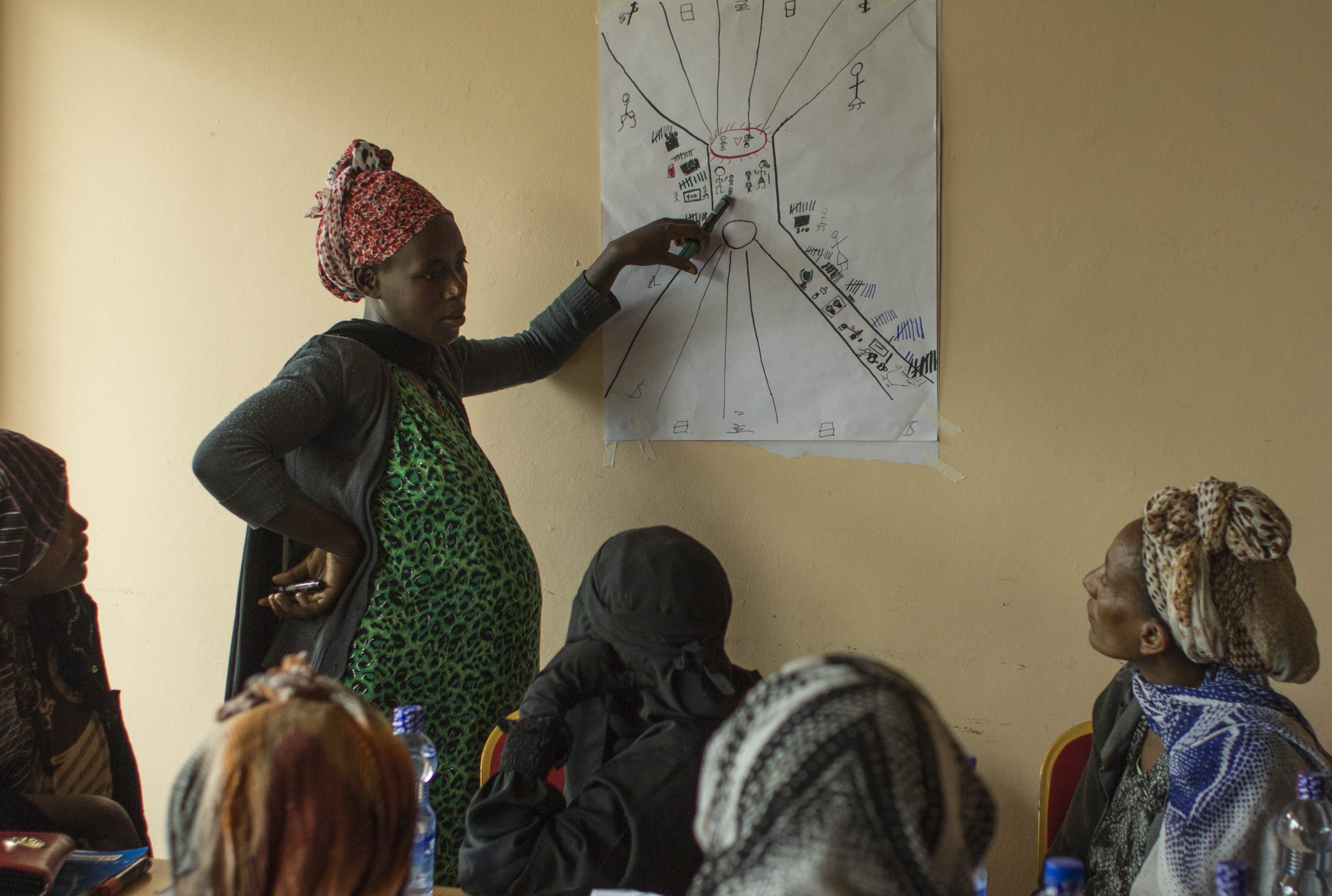
‘Happy Life’
GALS Catalyst workshop
Programme Overview
Insert Overview based on Inception Report Excel sheet after discussions and feedback from GIZ
Session and Toolkit Resources
Day 0: Saturday 15th November: Welcome and Team-building
Activities
Participant welcome: Participants choose their diaries and drawing case and are given symbol/name tags and cards for the activities.
Personal reflection on personal identity and workshop expectations and questions
Pair to Pyramid introductions and workshop expectations
Plenary sharing, voting and quantification of expectations and challenges.
Bangla videos from participating partner organisations in evening
Purpose
- establish local ownership from the start – this is a Bangladesh initiative, not a foreign import.
- make new friends and build solidarity among participants from different backgrounds.
- give space for excitement and free talking in Bangla so that all participants are settled and actively participating from the start of Day 1.
- establish importance of clarity of visual communication and discipline of inclusive participatory group self-facilitation from the beginning
- establish Bangla as the principal language for participants
Skills Development
- Meeting, talking and listening to new people of different social status.
- Overcoming lack of confidence and shyness of less vocal participants.
- Starting to introduce drawing and colour-coding principles.
- Inclusive participatory process and participatory voting and quantification
Facilitation
Facilitated by GIZ with inclusive participatory self-facilitation of groups
Documentation
Flipcharts from each of the final groups with quantified expectations and challenges. In Bangla for participant record. English translation for Asel.
Insert Day 0 Reports Bangla and English
Some relevant GALS Videos from other processes
Day 1: Sunday 16th November: Happy Life Visions
Activities
Morning: My Life Diamond
Brief 3 min introduction by Asel and Saliya
Pair to pyramid expectations, applause etc
My Life Diamond: individual likes and don’t’ likes fun drawing exercise. Includes personal, work and family.
Afternoon: Happy Life Soulmate Visions
Visions for a Happy Life: soulmate activity includes personal, work and family
Evening:
Making diagrams pretty with coloured pens in the diaries.
Drafting tool steps for the My Life Diamond and Happy Life Vision in pencil at the back of the diaries.
Dinner: meeting new people.
Purpose
- To interest participants in possibilities for change
- To introduce the linkages between personal/family-gender/community without too much sensitivity
- To reinforce belief in possibilities for change and the linkages between personal/family-gender/community without too much sensitivity
- To introduce GALS principle 1 ‘always look on the bright side of life’ – always turning negatives dislikes into positive visions of change
- To build solidarity according to visions rather than status.
Skills Development
- Strengthen Symbol Picture drawing skills and basic visual dynamics: colour-coding and size.
- Establish practice of making drawings very clear. Not just children’s drawings and smiley faces. Really communicating to other people.
- Strengthen participatory listening, communication and leadership skills for participants at all levels.
Facilitation
My Life Diamond
- Pairwise discussions with new people.Pyramid in role-based groups.
- Individual work sitting in role-based groups guided by Asel
Happy Life Soulmate Visions
- Soulmate groups self-facilitating ensuring that peolple who have less confidence speak from the front and present.
- Plenary presentation in Bangla. With discreet translation at the back from SAM for non-Bengali speakers. Facilitators at the back can ask some questions at the end.
- At all stages remember the applause!!
Documentation
My Life Diamonds. Not shared or documented. They will be the baseline starting point for the Happy Community Review later. No interference, policing or looking over shoulders at this stage.
Soulmate Vision Plenary:
Plenary presentations of the soulmate flipcharts can be videoed and documented.
Diagrams should be photographed, clearly marked with group details and marked up with paper text tickets in Bangla and in English to clarify drawings for outsiders. Three photographs: without text tickets, with Bangla and with English.
Insert Day 1 Report Bangla
Insert Day 1 Report English
Day 2: Monday 17th November: Happy Life Action Tree
Activities
In Soulmate groups
Morning
1 hour Recap in soulmate groups to decide and prioritise one agreed part of the vision to use for the Happy Life Action Tree.
Individual reflection and guided drawing of Happy Life Action Tree. Emphasis on SMART action fruits even if this means reducing analysis.
Afternoon
Soulmate sharing:
Drawing fun charades for sharing roots and branches.
Participatory quantification of the SMART Action Fruits.
Plenary feedback and discussion.
Evening
Completing Action Tree diagrams in the diaries adding any elements from the group discussion.
Drafting tool steps for the Happy Life Action Tree at the back of the diaries.
Dinner meeting new people
Purpose
- To further strengthen picture symbol skills
- To introduce GALS principle 2 ‘Action from Day 1’ – focus on what you yourself can do. Don’t get bogged down in problems of changing others.
- Sharing to broaden ideas about possible actions for change
Skills Development
- To further strengthen visual communication clarity through pictures
- Further develop participatory leadership skills – leaders listen, shy people come forward and start to lead.
- Strengthen participatory quantification
Facilitation
Overall activity guided Step by Step in simple English by Asel from the back with translation from SAM??, Polok?? Rotate between organisation staff??.
Soulmate groups self-facilitating ensuring that people who have less confidence speak from the front and present.
Plenary presentation in Bangla. With discreet translation at the back from SAM for non-Bengali speakers. Facilitators at the back can ask some questions at the end.
At all stages remember the applause!!
Documentation
Plenary presentations of the soulmate flipcharts can be videoed and documented.
Diagrams should be photographed, clearly marked with group details and marked up with paper text tickets in Bangla and in English to clarify drawings for outsiders. Three photographs: without text tickets, with Bangla and with English.
Insert Day 2 Report
Day 3: Tuesday 18th November: Empowerment Network Map
Activities
In GALS Role groups
Morning
1 hour recap of the tool steps from Day 1 and 2 in role groups
Individual reflection and guided drawing of Empowerment Network Map. Identification of 5 positive relationships as starting point for peer sharing and strengthening their own support networks to achieve their visions.
Afternoon
Plenary recap and checking of the tool steps from the 4 tools so far at the back of participant notebooks. So that all participants are clear.
Pairwise role plays of peer sharing. Pairs in the group each decide on a different tool from the 4 tools so far.
Evening
Completing Empowerment Network Maps in the diaries, adding further issues with relationships or ideas for peer sharing from the group discussion.
Reflection on lessons from the role play: 3+ useful things to do and 3+ things to avoid.
Dinner getting to know new people in the GALS role groups better.
Purpose
- To reinforce belief in strategies for change and the linkages between personal/family-gender/community
- To introduce peer sharing as a means of strengthening social networks that help people reach their own visions. Not an altruistic preaching/mentoring chore to ‘spread the organisation/donor word’.
- Reinforcing the idea that even women from disadvantaged families have ways of changing things if they think carefully.
Skills Development
- To further strengthen drawing skills for people and organisations.
- Introduce systems diagramming skills: shapes, lines, relationships
- Explore peer sharing skills – how to introduce ideas and tools, how to persuade, body language, tone of voice, arguments etc.
Facilitation
Facilitated by GIZ with self-facilitation of groups
Documentation
IMPORTANT: the individual empowerment maps must remain completely private. Participants must be in complete control of what they share. Otherwise if they do a very honest analysis, people in difficult families and communities may become more vulnerable if their situation becomes public.
Plenary presentations of the role group peer sharing maps can be videoed and documented.
Diagrams should be photographed, clearly marked with group details and marked up with paper text tickets in Bangla and in English to clarify drawings for outsiders. Three photographs: without text tickets, with Bangla and with English.
Insert Day 3 Report
Day 4: Wednesday 19th November: Empowerment Network Role Plays and Songs
Activities
In location/organisation groups
Morning
Recap of opportunities and challenges of network relationships:
Participatory quantification map of peer sharing commitments.
Participatory aggregation of 3 positive and 3 negative lessons for peer sharing from the role play.
Quantification of peer sharing commitments by location and/or organisation at the different levels.
People go around the room and look at the maps from other organisations and locations to get more ideas for their own personal and/or location maps.
Afternoon
Showing song videos from different cultures.
Back in soulmate groups:
‘WE ARE THE CHAMPIONS” songs.
Purpose
- To develop potential support and peer sharing plans based on personal social networks of champions.
- Linking to work with other local stakeholders by activists and organisations. Possibility of co-facilitating larger groups by champions and activists with focus on champions sharing their stories, with activist support.”
- EVERYONE can dance and sing. Not just people with a good voice. Many roles – rhythm drumming, dancing, chorus etc.
Skills Development
- To develop potential support and peer sharing plans for locations and organisations based on personal social networks of champions.
- Linking to work with other local stakeholders by activists and organisations. Possibility of co-facilitating larger groups by champions and activists with focus on champions sharing their stories, with activist support.
- EVERYONE can dance and sing. Not just people with a good voice. Many roles – rhythm drumming, dancing, chorus etc.
Facilitation
“This should be quantfied for the group/ location, looking also for opportunities to collaborate and share with groups of different types eg their own SHGs, religious or kin networks etc.
Personal commitments marked also on the individual empowerment maps
that they will track.”
Can also show videos from the website of a variety of different types of song.
Documentation
Location/organisation peer-sharing diagrams should be photographed, clearly marked with group details and marked up with paper text tickets in Bangla and in English to clarify drawings for outsiders. Three photographs: without text tickets, with Bangla and with English.
Songs should be transcribed in Bangla, and translated to English. And written on flipcharts that are placed on the wall for collective singing Days 5 and 6.
Insert Day 4 Report
Day 5: Thursday 20th November: Happy Life Action Highway 3 months December – March
Activities
In GALS Role groups
Morning
Individual guided drawing of Happy Life Action Highway for 3 months from beginning of December through Ramadhan to beginning of March.
Include:
– visions for personal, family and community change from Happy Family Soulmate activity
– current situation from My Life Diamond likes and dislikes
– opportunities and challenges from Action Tree and Empowerment Network Map and role play
– SMART Action commitments as milestones and actions to move towards your vision from Action Tree and Empowerment Network Map.
Choose and finalist your favourite tool for the photograph and interview.
Afternoon
Participant Training Assessment
WE ARE THE CHAMPIONS song competition
Evening during dinner: Song prize giving and party
Everyone learns and sings the winning song
Purpose
- For everyone to go away with their own personal multilevel plan. That they will implement and track.
- EVERYONE can dance and sing. Not just people with a good voice. Many roles – rhythm drumming, dancing, chorus etc.
Skills Development
- Meeting, talking and listening to new people of different social status.
- Overcoming lack of confidence and shyness of less vocal participants.
- Starting to introduce drawing and colour-coding principles.
- Participatory principles and participatory quantification
Facilitation
Individual guided drawing – can someone from NP or GIZ volunteer to do this in Bangla using the toolkit steps to save time on translation?
Documentation
Individual Action Highways are not documented in detail at this stage, but they can be photographed with the participant’s permission for assessment of the training during the other participant interviews.
Their main purpose is as a plan for change by participants and tracked as a baseline and progress assessment for the Happy Community Review in March.
Participant Training Assessment during the song competition and early evening:
Participants who are not singing Every participant chooses their favourite tool and is recorded for 10 minutes as they explain briefly what they have drawn on their drawings.
Interviews to be done in Bangla by staff of a different organisation from their own. Starting with champions, then activists then staff who will not be at the facilitation follow up meetings. They are photographed with each tool as assessment for the report.
NB can they also receive a copy of the photographs to paste in their diaries eg during the community visits?
Interviews to be translated for Asel and reporting.
Insert Day 5 Report
Day 6: Friday 21st November: Tree of Action Fruits Certification Ceremony
Activities
Personal reflection :
- 3 most important things learned
- 3 biggest remaining questions
- 5 priority action commitments from their MLH on pieces of green paper as unripe fruits. With name and symbol (has this changed?)
- Who will they invite to the community visit?
Location and organisation groups:
- Quantify things learned and remaining questions in Bangla on flipchart.
- Plan for community days and follow up on questions.
Tree of Action Fruits:
Participants come up to the tree and post these on the tree – piling the same commitments on top of each other.
Participants all sing the winning song as others come up.
Purpose
- end the workshop on a very positive and inspiring note with action commitments.
- provide quantified conclusions on learnings and remaining challenges for the report
- Have a plan for the Community Days
Skills Development
- Meeting, talking and listening to new people of different social status.
- Overcoming lack of confidence and shyness of less vocal participants.
- Starting to introduce drawing and colour-coding principles.
- Participatory principles and participatory quantification
Facilitation
Facilitated by GIZ with self-facilitation of groups
Documentation
Flipcharts of learnings and remaining questions are aggregated. And summary given before the Tree Ceremony.
Tree is videoed and photographed with and without tickets as before.

Insert Day 6 Report
Internal one-stop resources page for ADVANTAGE GALS Orientation and Planning Meetings 12th – 17th October 2025